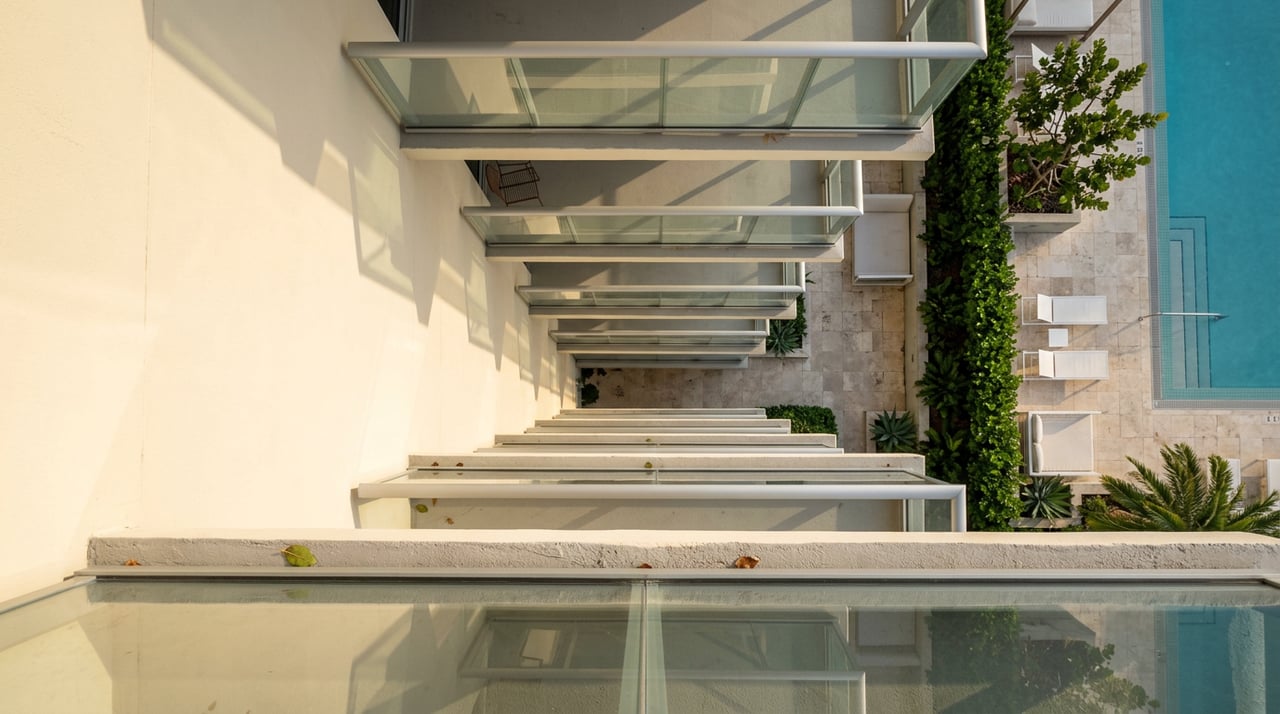
Picture two one-bedrooms listed the same week. Same square footage, ten minutes apart, one in Brickell and one in Edgewater. The Brickell unit's HOA fee runs a little higher. On paper, the Edgewater listing looks like the better carrying cost. Six months later, the Edgewater building's board adopts a new budget under Florida's reserve funding law, and the gap closes or flips entirely.
That is not a fluke of timing. It is what the law was built to do this year, and it is the part of Miami's 2026 condo market that most buyers are missing while they focus on the number that scares everyone: the special assessment.
Assessments get the headlines because they are large, sudden, and easy to explain. The quieter story is what is happening to the monthly HOA fee itself. Florida's structural reserve law did not just add inspections. It rewired what that fee is legally allowed to represent, and 2026 is the year the old, artificially low number stops being available as an option. If you are comparing two condo listings on price and monthly fee alone, you may be comparing one building that has already absorbed that reset and one that hasn't gotten there yet.
The law changed what "HOA fee" is allowed to mean
Since Senate Bill 4-D passed in 2022, followed by SB 154 and this year's HB 913, Florida condo associations three stories or taller have been working toward a single deadline: full funding of reserves for eight structural components identified in a Structural Integrity Reserve Study, with no more votes to waive or underfund them. Roof, load-bearing structure, fireproofing, plumbing, electrical, waterproofing, windows and doors, and any other qualifying item over roughly $25,675 for 2026.
For decades, Florida boards could and did vote to keep dues artificially low by skipping or shrinking reserve contributions. That option closed for budgets adopted on or after January 1, 2025. Buildings that got in under the wire with a budget adopted on or before December 31, 2024 could still vote to waive, but even those associations had to begin funding their SIRS reserves according to the study starting January 1, 2026. In other words, no matter which side of that deadline a building's last budget landed on, the fee you see on a listing sheet today reflects either a building that has already repriced for full structural funding, or one that is about to.
That distinction matters more in a market where boards adopt new budgets on staggered fiscal calendars throughout the year. A fee that looks attractive in August 2026 may simply be a fee that hasn't caught up yet.
| Budget adopted before the deadline | Budget adopted after the deadline | |
|---|---|---|
| Reserve waiver | Could still vote to waive or underfund through 2025 | No waiver allowed for SIRS structural items |
| Funding start | Required to begin funding January 1, 2026 regardless | Full funding built in from adoption |
| What the current HOA fee reflects | A number in transition, likely to rise at next budget cycle | The post-reset cost of ownership |
The practical move for a buyer is not to assume the lower fee is the better deal. It is to ask when the building last adopted a budget and whether that budget already reflects full SIRS funding.
What this looks like on the ground in Brickell and Edgewater
The dollar amounts already showing up in 2026 tell two different stories depending on building age and what triggered the charge.
In Brickell's 2000s-era towers, the assessments moving through boards this year tend to be smaller and tied to discretionary or wear-and-tear items rather than the mandatory structural list. Brickell Heights East approved a $3,200 per-unit assessment for pool repairs in the second quarter of 2026. Plaza on Brickell followed with an $8,500 per-unit charge for elevator modernization in the third quarter. Brickell on the River billed $5,400 per unit for parking garage resurfacing heading into the fourth quarter, and Santa Maria spread a $12,000 per-unit roof replacement across two years rather than collecting it in one lump sum. These are real costs, but they are not the same category of risk as a structural reserve shortfall, because non-structural items can still be phased, financed, or in some cases delayed by a board vote.
Older coastal stock tells a starker story. Buildings that reached their 25 or 30-year milestone inspection age with underfunded reserves have already produced some of the largest assessments in the county. Palm Bay Yacht Club, a 235-unit, 27-story tower in Miami, saw a $46 million assessment work out to as much as $175,000 per unit. Cricket Club, a bayfront building in North Miami built in 1975, levied roughly $134,000 per unit. Those are not optional line items. Once a milestone inspection identifies substantial deterioration, repairs have to begin, and the SIRS ties every dollar of that repair to a reserve funding schedule the association can no longer vote away.
The lesson for a buyer comparing two towers isn't just "check for a pending assessment." It's asking which kind of assessment it is. A discretionary five-figure charge for a pool deck is a one-time cost you can underwrite. A structural charge tied to a SIRS finding is a permanent change to what that building will cost to own going forward, because the reserve schedule behind it doesn't expire when the check clears.
The lender is already doing this homework for you
If you plan to finance rather than pay cash, this diligence is happening whether you ask for it or not. Fannie Mae's confidential ineligibility list for condo projects included roughly 696 buildings across Miami-Dade, Broward, and Palm Beach counties as of March 2025 data reported by Mortgage Professional America, nearly half the statewide total. Fannie Mae does not publish the list, so most owners and buyers only learn a building is on it when a loan application gets rejected mid-transaction.
The underwriting environment tightened further in March 2026, when Fannie Mae issued Lender Letter LL-2026-03, retiring the Limited Review option for condo purchases. Every conventional purchase now requires a Full Review, meaning the lender pulls the HOA budget, financial statements, reserve study, delinquency data, and insurance documents before closing. That is essentially the same packet a careful buyer should be requesting on their own, just arriving later in the process and with far less room to walk away cleanly if something looks wrong.
Requesting it yourself, before you are under contract, means you find out about a reserve shortfall or a pending SIRS-driven assessment on your own timeline instead of the underwriter's.
What to actually request, and when
Florida's HB 1021 transparency requirement, effective January 1, 2026, gives you a head start. Associations with 25 or more units must now post governing documents, budgets, and reserve studies through a dedicated website or app, and owners have a legal right to view completed SIRS and milestone reports within 30 days of completion.
Before making an offer on a resale condo, three documents tell you almost everything you need to know:
- The current Structural Integrity Reserve Study, showing what percentage of required reserves is actually funded, not just what the study recommends
- The milestone inspection report, including any Phase 2 findings, if the building has reached its 25 or 30-year age trigger
- A written disclosure of all current, pending, and anticipated special assessments with per-unit dollar amounts
If a seller or association cannot produce these within a reasonable window, treat that delay itself as information. Under the new transparency rules, a building in good standing usually has this paperwork ready to go.
How this changes the offer, not just the checklist
Market conditions in 2026 give buyers real room to act on what these documents show. Reports through the first half of the year put Brickell resale inventory between roughly 17 and 19 months of supply, with listings averaging around 113 days on market in the first quarter of 2026, and Miami-Dade's countywide existing-condo supply sat at 12.3 months as of June 2026, well above the level associations typically consider balanced. That is buyer-favorable territory, and it changes what a pending assessment means for negotiation.
When a disclosure turns up a pending or anticipated assessment, two approaches have become standard in 2026 Miami resale transactions: the seller pays the outstanding balance in full at or before closing, or the purchase price is reduced by an amount equal to the assessment. Both are workable. What matters is getting the disclosure early enough to negotiate it into the contract, rather than discovering it during the inspection period when your leverage has already narrowed.
A few questions worth asking directly
Does this only affect older buildings? The milestone inspection is age-triggered, arriving at 25 years for coastal buildings and 30 years inland, then every 10 years after. The SIRS requirement is different. It applies to any residential condo building three habitable stories or taller regardless of age, so a tower finished this year still needs a SIRS on file.
Can I still finance a unit in a building with a pending assessment? Often yes. The assessment itself doesn't automatically disqualify a building. Undisclosed or unfunded reserves, unresolved structural findings, or the building's presence on Fannie Mae's ineligibility list are what typically stall a loan, which is exactly why requesting the SIRS and milestone report before you're under contract matters.
Who ends up paying an assessment that's already been approved? It's negotiable and settled in the contract, not assumed. A seller paying the balance at closing and a price reduction equal to the assessment are both common paths in today's market, but either one needs to be documented before you sign.
None of this makes a Miami condo a bad purchase. It makes the HOA fee on the listing sheet a starting point for a question, not a finished number.
If you're comparing buildings in Brickell, Edgewater, or anywhere else in Miami's condo market and want someone to read a building's SIRS and reserve funding schedule before you write an offer, Maruja Gil works this diligence in English, Spanish, and Portuguese for buyers across South Florida. Request your complimentary home valuation to start the conversation about what a specific building's numbers actually mean for your offer.